

-
Industrial competitiveness depends not only on producing clean energy, but also on ensuring that this energy can reach where it creates value.
-
“Spain has concentrated much of its efforts on electricity generation, and the big challenge now is to attract demand—industry that creates jobs and quality,” Ramón Roca, director of El Periódico de la Energía.
-
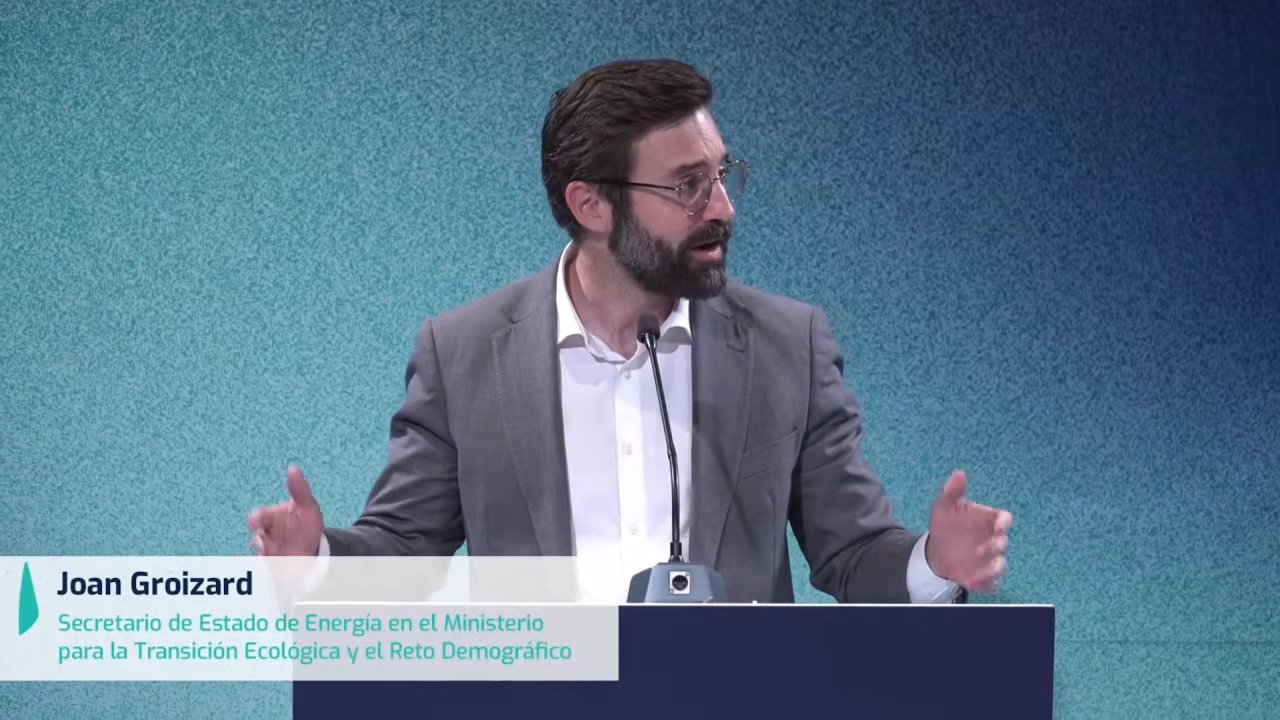
“The challenge is not so much attracting investment as ensuring that this transformation truly reaches the territory and translates into jobs and wealth,” Joan Groizard, Secretary of State for Energy.
June 10, 2026.
The fifth edition of Noche de la Energía, organized by El Periódico de la Energía, delivered more than recognition for outstanding projects in areas such as decarbonization, storage, or digitalization. Amid institutional speeches and interventions by key sector players, a key idea emerged: Spain’s energy transition has reached a level of maturity where simply continuing to add generation capacity is no longer enough. The challenge now is to turn that advantage into economic activity, jobs, and industry.
This is not a new reflection for Foro Industria y Energía. For some time, we have argued that industrial competitiveness depends as much on producing clean energy as on ensuring that this energy can reach where it creates value: factories, production processes, and the companies that sustain our economic fabric.
Towards the end of “generacentrism”
In this context, the remarks by Ramón Roca, director of El Periódico de la Energía, were particularly significant. He warned that Spain has focused much of its efforts on electricity generation and that the major challenge now is to “attract demand, industry that generates jobs and quality.” He summed it up with a simple yet forceful statement: “Without demand, there is no possible future.”
This approach aligns closely with an idea that the Forum has been developing for some time: the need to move beyond “generacentrism”, the tendency to measure the success of the transition almost exclusively in installed megawatts, while overlooking the system’s capacity to supply new economic activities and strengthen industrial competitiveness.
Because the energy transition does not end when a new generation plant is connected. It ends when that electricity enables a new production line to open, a factory to expand, or an investment to be attracted that would otherwise be located in another country.
Rowing in the same direction
Another idea running through Ramón Roca’s speech was the need to build the transition through dialogue and collaboration. “We all have to take part; there is room for everyone,” he said, advocating for a model based on agreement and the pursuit of shared goals.
This reflection connects with one of the founding principles of Foro Industria y Energía: the energy transition will only be possible if it integrates all actors across the value chain, from industry and energy companies to public administrations and network operators. Industrial competitiveness depends not only on technology or regulation, but also on the ability to build a shared vision of the energy future.
Networks, the decisive link
If there is one area where the diagnosis appears almost unanimous, it is the role of electricity grids.
Roca stressed that “Spain needs more and better grids” and warned that without accelerating connections, increasing electricity demand will be impossible. He also highlighted the need to facilitate capacity expansion for already established industry—an issue that is particularly relevant for the country’s reindustrialization.
At Foro Industria y Energía, we have long been warning about this challenge. Our analyses show growing saturation of distribution networks and electrical substations, a reality that limits both the arrival of new industrial projects and the expansion of companies that already produce and create jobs in Spain.
Ultimately, energy remains the true passport of industry: it determines which projects can be developed, which can grow, and which end up seeking opportunities elsewhere.
A shared diagnosis that now requires execution
The Secretary of State for Energy, Joan Groizard, echoed much of this diagnosis from an institutional perspective. During his speech, he highlighted the strong investor interest in Spain and the significant volume of industrial projects seeking grid connection. The challenge, he stated, is not so much attracting investment as ensuring that this transformation effectively reaches the territory and translates into jobs and wealth.
In this regard, he referred to measures included in Royal Decree-Law 7/2026 to prioritize grid access for industry needing to increase its electricity demand, as well as reforms aimed at freeing up capacity and strengthening distribution infrastructure.
These are steps in the right direction. However, real success will depend on whether these measures translate into stable regulatory signals, effective investment in grids, and planning capable of keeping pace with the demands of industrial transformation.
The transition enters a new phase
Perhaps this is the main conclusion from this edition of Noche de la Energía. There is growing alignment around a shared diagnosis: Spain’s competitiveness no longer depends solely on producing more renewable energy, but on ensuring that this energy finds demand, drives industrial activity, and strengthens the productive fabric.
The energy transition is thus entering a new phase—one in which success will no longer be measured only in installed megawatts, but also in expanding factories, retained investments, and consolidated industrial employment.