

-
The European Commission is consulting Member States on a temporary aid framework for sectors exposed to the Middle East crisis, with the aim of adopting it before the end of April.
-
Industry is not asking only for subsidies. It is asking for predictability. It is asking for stable regulatory frameworks. It is asking for access to competitive energy and for tools to better manage its consumption and its risk.
-
Energy remains a critical variable in industrial activity, not only in terms of cost, but also in terms of stability, predictability and planning capacity.
-
Isabel Núñez Rotta, director of Foro Industria y Energía: “a strong industrial economy is not the one that receives the most aid when things get difficult, but the one that is best prepared not to need it every time the system shakes.”
April 24, 2026.
The European Commission has once again activated one of those mechanisms that only emerge when the situation truly tightens: a temporary State aid framework to contain the economic impact of the crisis in the Middle East. The initiative, announced on April 13 by President Ursula von der Leyen and still under consultation with Member States, seeks to relieve pressure on the most exposed sectors (from agriculture and fisheries to transport) and to raise the aid threshold for electro-intensive industries above the 50% currently allowed under the Clean Industrial Deal framework (CISAF). Member States have until the end of the month to define their position. The response is logical, necessary and, in a way, predictable. But it also raises an underlying question that Europe has yet to fully resolve: why does the competitiveness of its industry remain so exposed to every shock in the energy system?
This is not a minor question. Because behind every new aid package, every regulatory adjustment and every temporary relief measure, the same diagnosis reappears: energy remains a critical variable for industrial activity, not only in terms of cost, but also in terms of stability, predictability and planning capacity. In the context of the energy transition, this reality becomes even more significant. European industry does not compete only on productivity, innovation or scale. It increasingly competes on its ability to manage energy intelligently in an uncertain environment.
Relief that responds to a real urgency
The proposal starts from an obvious observation: certain sectors are particularly exposed to fluctuations in the energy market and to geopolitical tensions. The most revealing detail of the proposal is not its sectoral scope, but that 50% threshold: the Commission implicitly acknowledges that absorbing more than half of a company’s electricity costs may still be insufficient to sustain its competitive viability. If that happens in times of stress, something in the market architecture is not aligned with the needs of Europe’s industrial base. The temporary framework mitigates it. It does not solve it.
“That relief, therefore, must be interpreted in its proper measure. Temporary aid does not in itself correct the structural fragility affecting the European energy system. It buys time, cushions impacts and prevents immediate deterioration. But it does not replace a deeper strategy that enables industry to operate with greater resilience, less exposure to volatility and more capacity to adapt,” says Albert Concepción, president of Foro Industria y Energía.
Energy as a competitiveness factor
For years, the debate around industry and energy has been dominated by two major axes: price and decarbonisation. Today, we could add a third: management capacity. It is no longer enough to ask how much electricity costs or how many emissions a technology can avoid. It is also necessary to ask whether companies can modulate their consumption, anticipate risks, diversify contracts and make energy decisions that strengthen their competitive position in the medium and long term.
This is precisely the key to industrial energy management. It is not just about consuming less, but about consuming better, more intelligently and with a strategic vision of the system in which companies operate. The energy transition will not be industrially sound if industry continues to act as a passive recipient of prices, rules and compensations. It needs to become an active player capable of managing its exposure to energy risk with its own tools.
The risk of getting used to the patch
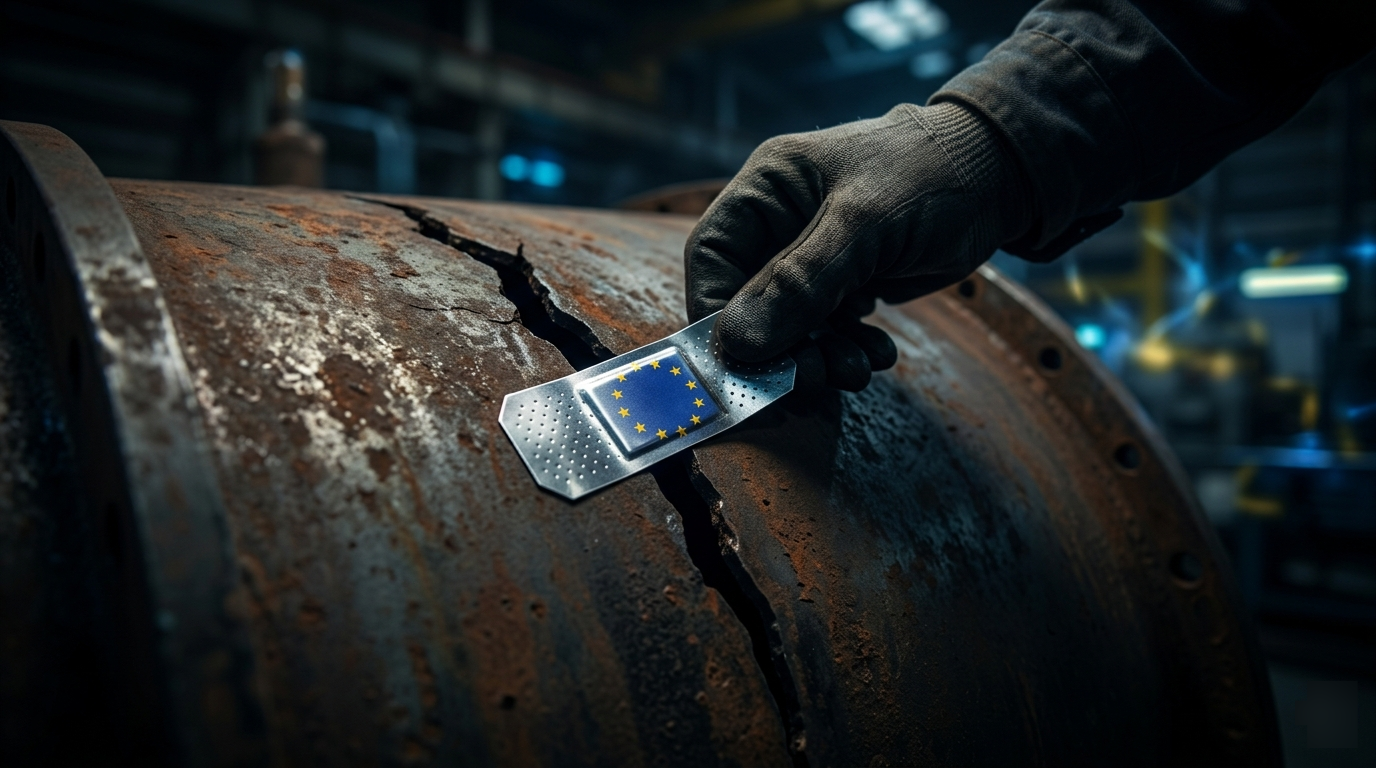
Every energy crisis leaves a lesson, but also a temptation: to normalise the exceptional response. If every episode of volatility ends with a new temporary framework, a regulatory exception or an extraordinary aid measure, the system ends up getting used to the patch. And when that happens, the underlying discussion shifts. The focus is no longer on how to reduce vulnerability, but on how to better distribute relief.
There is nothing objectionable about supporting the most affected sectors. On the contrary, in certain circumstances it is essential. The problem arises when the emergency response becomes a substitute for strategy. Europe needs an industrial policy that does not merely react to shocks, but helps build a more stable, flexible and competitive energy base. In this regard, corporate energy management has much to contribute.
What industry really needs
Industry is not asking only for subsidies. It is asking for predictability. It is asking for stable regulatory frameworks. It is asking for access to competitive energy and, above all, for tools to better manage its consumption and its risk. This includes energy efficiency, well-planned electrification, long-term contracts, demand flexibility, storage, self-consumption and a more mature integration between industrial strategy and energy strategy.
In other words, the transition will not be solved solely with more public support, but with a better architecture of decision-making. Temporary aid can act as a bridge. But the destination must be different: an industry capable of competing in an energy system less dependent on shocks and more oriented towards stability.
A political signal, not a final solution
The consultation launched by the Commission is undoubtedly a relevant political signal. It shows that Brussels remains willing to intervene when circumstances threaten to overwhelm the most exposed sectors. It also confirms that the European Union understands that energy remains a factor of economic and territorial cohesion. But precisely for that reason, this measure should be read carefully: not only as an emergency response, but as a symptom.
The symptom is clear. European industry still needs protection against shocks it does not control. And that means that the energy transition, if it is also to be a successful industrial transition, must pay much greater attention to companies’ energy management—not as a secondary issue, but as a central lever of competitiveness.
“Perhaps the main lesson of this new temporary framework is that European energy policy continues to move between urgency and strategy,” says Isabel Núñez Rotta, director of Foro Industria y Energía. “When a crisis hits, Brussels responds. But the real challenge is to ensure that industry does not always have to depend on that response. Because a strong industrial economy is not the one that receives the most aid when everything becomes difficult, but the one that is best prepared not to need it every time the system trembles.”