

-
Spain allocated more than €10.2 billion from the Next Generation EU funds to current expenditure.
-
Are European funds being used to transform our productive fabric, or are we facing a case of bread for today and hunger for tomorrow?
-
Diverting these flows to cover present-day budgetary urgencies deprives the industrial sector of the incentives needed to undertake high-risk investments that cannot be postponed.
-
If the country does not seize this historic window of opportunity to strengthen its industrial base, we will lose competitiveness against EU partners and global competitors.
-
This is not a matter of choosing between pensions or industry, but of understanding that one depends on the other.
May 22, 2026.
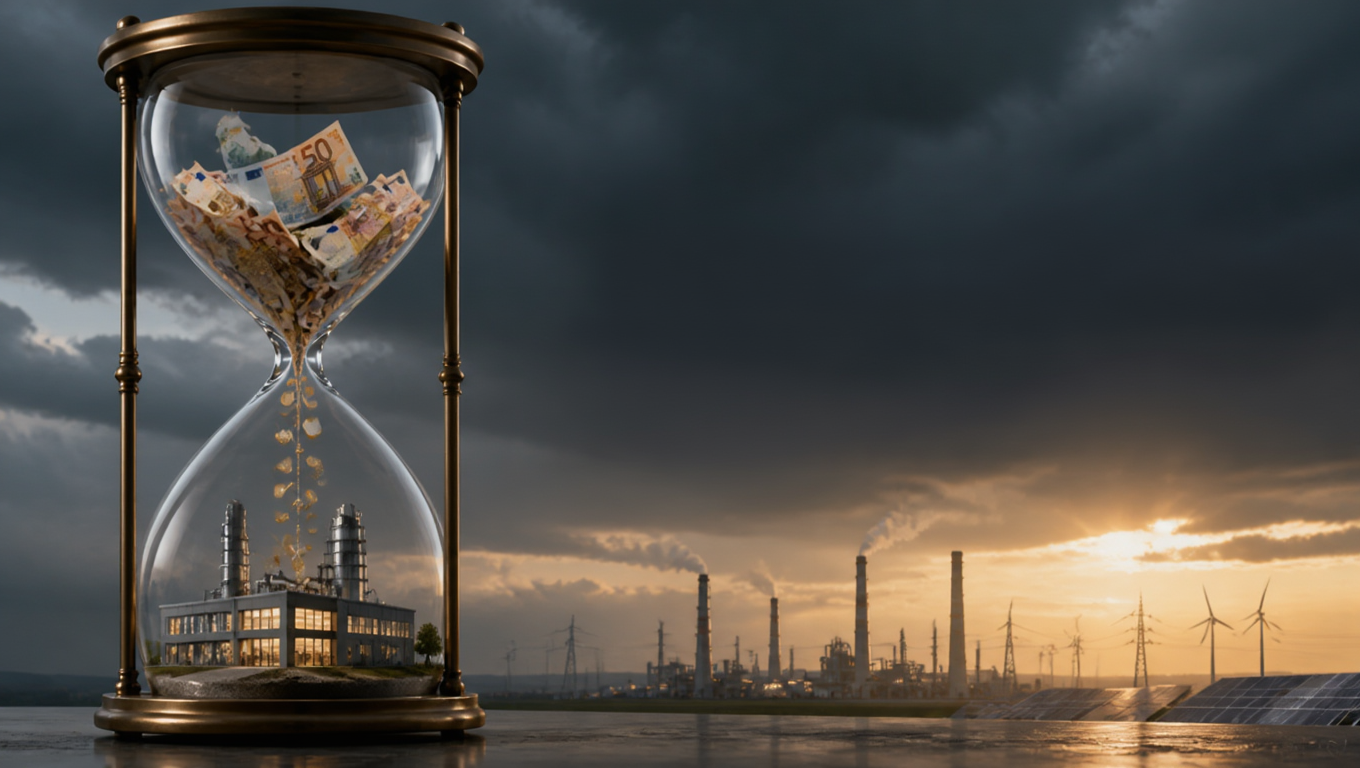
The European Commission recently confirmed, through Eurostat, that Spain allocated more than €10.2 billion from the Next Generation EU funds to current expenditure during the first five years of implementation of the Recovery, Transformation and Resilience Plan (PRTR). This represents nearly 23% of the €45 billion executed to date. Of that amount, €2.389 billion was used to cover pension items in 2024, something expressly prohibited by the European regulation governing the Recovery and Resilience Facility. Brussels has requested explanations. The Court of Auditors has raised the alarm. All of Europe is watching.
The Government denies that any rules have been breached and frames it as a technical accounting matter. That may be the case. But even if the dispute is resolved on accounting grounds, a deeper question remains: are European funds truly serving to transform our productive fabric, or are we facing a case of bread for today, hunger for tomorrow?
The architecture of trust: earmarked funds for structural objectives
This is not about questioning the legitimacy of the recipient items, but about reflecting on the impact that deviating from their intended purpose has on the competitive strength of our economy and, paradoxically, on the future sustainability of the welfare state itself. Next Generation EU was created with a very specific purpose: to use the pandemic crisis as a lever to structurally transform European economies, strengthen their strategic autonomy, accelerate the twin transition (green and digital), and reduce dangerous dependencies on third countries. That was the political agreement and regulatory mandate underpinning the largest common stimulus instrument in EU history.
Arguing that an objective is legitimate — and the adequacy of pensions unquestionably is — does not justify altering the nature of the funds. Redirecting these resources to cover present-day budgetary pressures undermines institutional credibility and, more importantly, deprives the industrial sector of the incentives needed to undertake high-risk technological investments that cannot be delayed.
When a fund designed to invest in a country’s productive future ends up financing ordinary expenditure, it is not only a rule that is broken: it is an opportunity lost that, by definition, will not return. There is an old trap in public management that consists of solving today’s problems with resources intended for tomorrow. Spain has just fallen into it — or at least that is what the Court of Auditors suggests — and it is worth confronting it head-on, without theatrics but without looking away. Bread for today. And a bill that someone will have to pay tomorrow.
The paradox of welfare: who will pay for tomorrow if we switch off the engine today?
It is undeniable that allocating resources to social transfers relieves immediate financial pressure. However, the economy, like physics, obeys laws of conservation: wealth is not created through distribution, but through production. If the country does not seize this historic window of opportunity to strengthen its industrial base, we will lose competitiveness against EU partners and global competitors. A weakened industrial sector translates into lower value-added employment, reduced tax revenues, and a more fragile trade balance.
The analytical question arises naturally: if we do not renew the productive base that generates state revenues, how do we intend to finance the pension system in the medium and long term? Tomorrow’s social sustainability is built on today’s industrial efficiency. Funds intended for reindustrialisation are used to provide immediate relief; but without reindustrialisation, the capacity to finance that same welfare in the future erodes slowly and irreversibly.
This is why the time factor is decisive. According to Funcas, Spain still needs to execute around €25 billion in grants before August 2026, with the clock ticking and material implementation lagging behind formal milestones. Failing to reindustrialise today does not mean standing still; it means falling behind.
Balancing urgency and long-term vision
It is understandable that, in a context of social and economic pressure, governments prioritise measures that provide immediate relief. Pensions are a cornerstone of the welfare state, and their sustainability is a legitimate concern. However, the real challenge lies in striking a balance between addressing present urgencies and building future capabilities. Because if there is one defining feature of European funds, it is precisely their transformative purpose: they are not designed to sustain the status quo, but to change it.
Therefore, the debate should not be framed in terms of mutually exclusive priorities. It is not a question of choosing between pensions or industry, but of understanding that one depends on the other.
A window that closes in August 2026
The Recovery and Resilience Facility has a deadline: August 2026. What is not executed will be lost. Spain is approaching the final stretch with an industrial sector that needs certainty to commit to long-term investments in decarbonisation and energy transformation, and with an institutional controversy that undermines precisely that certainty.
Industrial energy management requires agile calls for proposals and, above all, the assurance that the promised resources will reach factory floors. Only through a strong, decarbonised and competitive productive fabric will we be able to generate the wealth needed to sustain a solid state. It is time to look beyond day-to-day budgetary pressures and remember that the best way to ensure the future welfare of citizens is to guarantee the viability of the industries that support them.
Spain’s energy and industrial future will not be built with stopgap measures. It will be built with investment, rigour, and the certainty that what is not done now — within this narrowing window — will become far more costly later.