

-
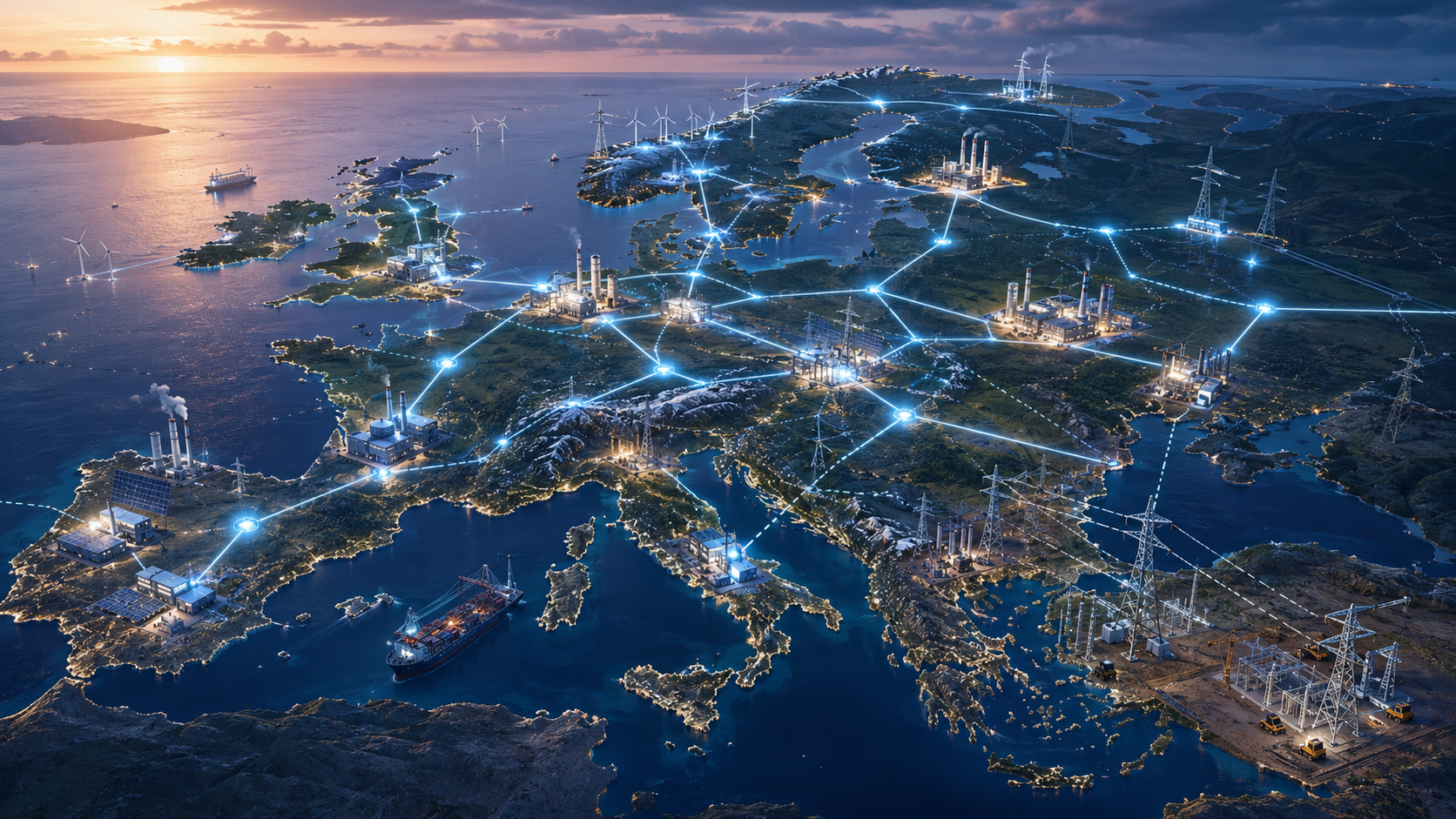
On 17 July, the European Commission presented the Electrification Action Plan, the package with which it aims to put European industry, transport, and buildings on the path toward electricity as the main alternative to fossil fuels.
-
“Today we propose to turn Europe into the world’s first electro-powered continent,” Ursula von der Leyen.
-
A rigorous analysis requires raising uncomfortable questions about the technical and operational feasibility of this paradigm shift on the factory floor.
-
The legislative acceleration driven from Brussels to upgrade networks is good news, but it collides head-on with real-world saturation on the ground.
-
Turning Europe into an electro-powered benchmark reduces geopolitical vulnerability and strengthens energy autonomy. But real competitiveness requires supply that is clean, predictable, abundant, and economically viable.
24 July 2026.
“Today we propose to turn Europe into the world’s first electro-powered continent.” With these words, Ursula von der Leyen presented on 17 July the Electrification Action Plan, the package with which the European Commission aims to free industry, transport, and buildings from their dependence on oil and gas once and for all.
The starting point is far from encouraging. According to Brussels, 70% of the electricity generated in the EU already comes from clean sources, but the real electrification of energy demand has been stuck at 23% for ten years. In other words: we produce green electricity, but we still heat, move, and manufacture using imported fuels. That dependence, the Commission recalls, has increased the energy bill for households and businesses every time there has been a geopolitical shock, and has reduced the competitiveness of European industry.
To reverse this, Brussels sets an indicative target of 46% electrification by 2040, a goal that, if achieved, would cut fossil fuel import costs by €260 billion annually. The plan is accompanied by a revision of the Emissions Trading System (ETS), which smooths the trajectory for allowance reductions for 2031–2040 and creates an Industrial Decarbonization Bank endowed with €100 billion.
What the plan gets right
There are reasons for optimism. The proposal directly addresses one of the major barriers to the transition: price. Electricity currently costs up to three times more than gas across much of Europe, and until that changes, heat pumps, electric vehicles, and electrified industry will not have a solid economic case against fossil alternatives. The proposal for “future-ready” electricity bills points in the right direction: reducing network tariffs, adjusting taxation, and deploying smart meters.
It is also welcome that ETS revenues stay at home. Requiring Member States to reinvest 50% of their national revenues in industrial decarbonization, and maintaining free allocation linked to real investments, reflects a principle that we at Foro Industria y Energía have long defended: industry contributions should return to industry, not disappear into another budget line.
However, a rigorous analysis requires raising uncomfortable questions about the technical and operational feasibility of this paradigm shift on the factory floor.
What about processes where electrons cannot reach?
The first question arises when considering the heterogeneity of our industrial fabric. Replacing conventional boilers with heat pumps or electrifying residential and commercial fleets follows a straightforward logic. However, in energy-intensive sectors such as steel, ceramics, cement, or basic chemicals, extremely high temperatures and the chemical nature of operations prevent electricity from being a viable alternative in the short or medium term.
We cannot afford a two-speed industrial policy that penalizes or leaves behind these strategic activities. As we noted a year ago in the context of Net Zero Tech 2025, the transition of these sectors requires a broader and more pragmatic set of solutions, where renewable gases, carbon capture, and thermal efficiency play as decisive a role as the electric vector.
It is not enough to plug in demand if the grid does not keep up
The second major challenge lies in physical distribution infrastructure. There is little point in incentivizing the purchase of electric machinery or lowering the energy component of the bill if industrial facilities cannot connect to the grid within reasonable timeframes. Waits of years to secure a connection point have gone from being a bureaucratic inconvenience to becoming a structural barrier to investment.
The warning we issued a few weeks ago remains fully valid: The future may be plugged in, but only if we first make it connectable. The legislative acceleration driven from Brussels to upgrade networks is good news, but it clashes head-on with real-world saturation. It is worth recalling that our analysis of the distribution map in March this year reflected an unsustainable reality: nearly nine out of ten electrical substations no longer have available capacity. Without immediate and massive investment in transmission and distribution, the plan risks remaining a statement of intent.
A necessary balance between ambition and execution
Turning Europe into an electro-powered benchmark is a desirable objective to reduce geopolitical vulnerability and strengthen energy autonomy. However, ensuring the real competitiveness of companies requires guaranteeing that electricity supply is not only clean, but also predictable, abundant, and economically viable. Industrial energy management cannot be based on future grid promises, but on operational certainty in the present.