

-
The EU signs its first tripartite agreement to boost energy storage.
-
According to European Commission data, Europe must quadruple its storage capacity over the next four years: around 200 GW of storage capacity will be needed by 2030, compared to just 55 GW today.
-
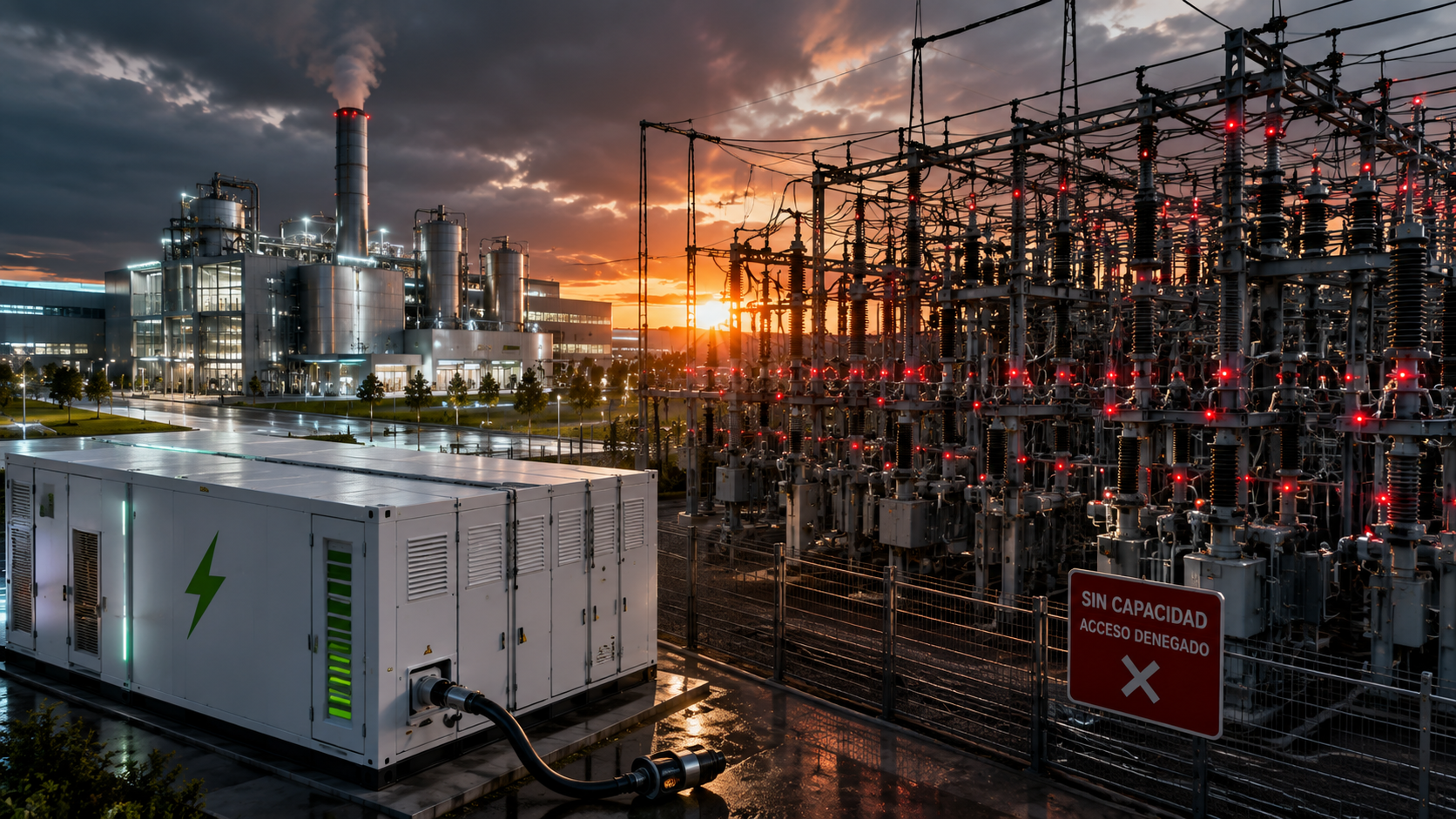
New storage projects will have to compete for the same congested space: nine out of ten substations have no available connection capacity.
-
The big question is not whether storage is necessary, but where we are going to plug it in.
3 July 2026.
Brussels has done something no European agreement had done for storage until now: put a signature, a deadline, and a quantified commitment on it. On 26 June, twenty-two Member States, developers, consumer industries, and financial institutions signed the first EU tripartite agreement on storage, with the aim of adding between 30 and 35 GW of capacity over the next two years. The Commissioner for Energy and Housing, Dan Jørgensen, did not hold back in describing storage as “the missing link” of the energy transition. He is not wrong, although it is worth asking: is it missing due to a lack of technology, or due to a lack of places to install it?
Figures to reassure investors
That the EU needs to act on storage comes as no surprise to those of us who closely follow developments in industrial energy management. The Commission’s own document states it plainly: around 200 GW of storage capacity will be needed by 2030, compared to just 55 GW installed at the beginning of this year. In other words, in less than four years Europe must nearly quadruple its storage fleet.
The chosen mechanism makes sense: committing regulators, financiers, and developers around annual project estimates provides the visibility that has so far been lacking, and without visibility, investment does not move. But a statement of intent, no matter how well designed, does not move a single megawatt if the physical system that must absorb it lacks the capacity to receive it. This is where the focus must shift: from the paper signed in Luxembourg to the real terrain of the electricity distribution grid.
Energy with memory
The logic of storage is simple and, at the same time, transformative: produce when convenient, store when there is surplus, and release when the system needs it. This ability to “give memory” to electricity changes the conversation for industry: it is no longer just about paying less for energy, but about having it available at the right time, with stability, and without being entirely dependent on the state of the grid.
Plugging tomorrow into yesterday’s grids: the great substation bottleneck
This is where storage runs into the real Achilles’ heel of the Spanish system: the structural saturation of the grid. The latest analysis by FIE together with Opina 360 revealed that 86.3% of the country’s electrical substations already lack available capacity, with only 7,400 MW free across the entire national territory. Unless they are located “behind the meter,” within industrial facilities themselves, new storage projects will have to compete for the same congested space already contested by renewables and industrial electrification.
The same country that needs to multiply its installed capacity already has nine out of ten substations with no available space. The big question is not whether storage is necessary, but where we are going to plug it in.
However, this relationship is not zero-sum. Storage does not only consume grid capacity: it can also free it. Properly located, it absorbs surplus during off-peak hours and releases it at peak times, reducing the need to oversize lines and substations for increasingly frequent demand peaks. It can be both a new applicant for grid access and a tool to ease the congestion that currently blocks other projects. Deployed in a scattered manner, it will worsen congestion; conceived as a component of system flexibility, it can become the best ally of a grid with no room for improvisation.
The conclusion Brussels has not yet written
The EU tripartite agreement is undoubtedly a necessary and well-directed step. Proof of this is that just yesterday Spain’s largest contract was announced between the companies Ignis and Engie for the use of batteries for the electricity system, with a capacity of 625 MW.
However, the success of the EU initiative will not be measured only in gigawatts committed, but in whether those gigawatts find a real connection point. While European energy policy advances through the signing of commitments, the physical geography of the Spanish — and European — grid continues to set the true pace of deployment. Storage may indeed be the missing link in the transition. But if the chain of grid access remains broken, that link risks being manufactured, financed, and signed… yet with nowhere to fit.