

-
When we trace the industrial footprint of tourism, we discover that every vacation experience begins much earlier, in the industrial warehouses that shape materials.
-
The future is not “either tourism or industry.” It is about understanding that one cannot function without the other.
-
Behind every tourist experience there are tons of steel, cubic meters of glass, kilometers of cable, megawatts of energy. There are skilled workers, engineers, maintenance technicians. There is industry.
-
We cannot afford to be a country that only sets the table; we must be the country that also makes the plate.
January 23, 2026
This week, Madrid has become the global epicenter of tourism with the celebration of FITUR. The halls of IFEMA are filled with promises of paradise beaches, gastronomic routes, and unforgettable experiences. In the collective imagination, the familiar mantra echoes: “Spain lives off tourism.” That Spain’s future is written exclusively with a “T” for Tourism. And it’s true—but only half true. It’s one of those truths that sounds good in a headline but hides a far more complex and, paradoxically, far more interesting reality.
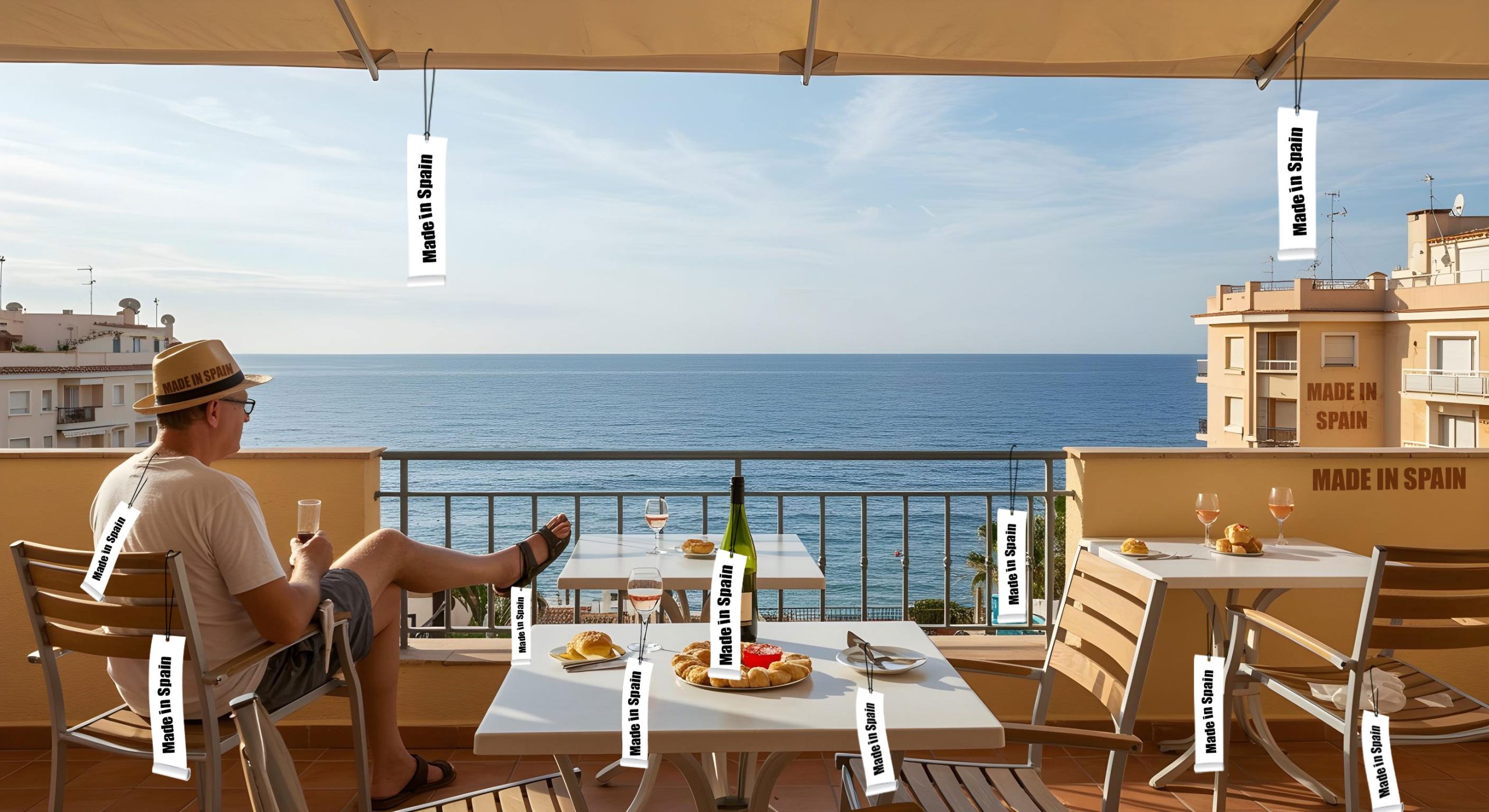
Because if we step back from the postcard image of the monument and trace the industrial footprint of tourism, we discover that this “T” for Tourism cannot stand without a capital “I”: Industry. Tourism is not a sector floating in a vacuum. It is, in fact, the shop window of a productive machinery that often remains invisible to the visitor’s eye. When we trace the industrial footprint of tourism, we discover that every vacation experience begins much earlier, in the industrial facilities that shape materials.
Beyond the postcard: the industry no one sees, but everyone touches
Let’s try a simple exercise. Imagine the scene: 32 degrees in the shade in Benidorm, mid-August. A German tourist orders an ice-cold beer. The bottle arrives at his table covered in condensation, perfect, and he never once wonders where that transparent glass container he’s holding comes from.
But someone had to make it. Somewhere in Spain, an industrial furnace reached 1,500 degrees Celsius to melt sand, sodium carbonate, and limestone. It consumed energy—a lot of energy—to turn those materials into the glass that now protects that beer. The Spanish glass industry produces more than 3.5 million tons of containers every year. Behind that cold drink on the terrace there is also a food industry that produces the beverage, logistics that transport it, and a cold chain that keeps it at the right temperature. Without all of that, the tourist would still be thirsty.
The toast by the sea is, in reality, the result of a complete industrial chain.
And that’s only the beginning. Someone also manufactured the sun lounger he lies on or the café table where he enjoys our cuisine. They seem like simple, almost decorative objects, but someone had to design them, manufacture them, assemble them. The aluminum structure comes from a metalworking industry that has had to compete in global markets. Technical textiles require specialized spinning and weaving processes. Wood, metal, plastics, textiles. All of it, before reaching the beach, has passed through furnaces, extruders, looms, and assembly lines.
The comfort of rest has an industrial history.
And what about the sightseeing bus that runs along Las Ramblas, or the high-speed train that connects destinations? Rolled steel, tempered glass, technical polymers, electrical systems, electronic components, tires, batteries. Each component is a small miracle of industrial engineering. The automotive and components industry directly employs more than 200,000 people in Spain. Steelmaking, automotive, chemical industries. Without them, tourists would still be stuck at the airport.
The mobility of discovery is a triumph of Spanish engineering.
And when that tourist returns to an efficient, air-conditioned, well-lit, and connected hotel, there it is again: construction materials, climate control systems, electrical equipment, home automation. Industry, once more.
The tourist experience is, to a large extent, an experience of consuming industrial products. Tourism is lived through experiences, but it is sustained by factories. Industry is the hardware; tourism is the software.
The energy behind the tan: the invisible engine of industry
In Spain, the sun is a dual economic asset. It attracts tourists, fills terraces, and justifies peak seasons. But it is also energy—energy that is now transforming our industry.
The same star that tans tourists on the Costa del Sol is the one that, thanks to photovoltaics, powers the plants that manufacture everything those tourists consume. Spanish photovoltaic production has grown significantly, making the country one of Europe’s leaders in solar generation. That energy allows the glass industry to reduce its carbon footprint, steel mills to integrate renewable electricity into their processes, and water treatment plants to operate more sustainably.
It is no coincidence that a country attractive for its climate is also a country with the potential to develop a more electrified industry that is less dependent on fossil fuels. The sun doesn’t just tan—it also powers productive processes.
Energy management in industry is now a strategic variable. It determines costs, influences investment decisions, and makes the difference between producing here or elsewhere. Spanish sunlight, ultimately, is not just a tourism asset. It is an energy vector that can support a green reindustrialization.
Without factories, the tourist paradise is just a set
Without industry, the tourist paradise is just a set. And sets, without structure, collapse. Because bottles don’t make themselves. Sun loungers don’t fall from the sky. Buses don’t grow on trees. And the energy all these industries need doesn’t appear by magic.
For years we have accepted a simplistic narrative: Spain as a sun-and-beach destination, a service economy, a vacation paradise. And that’s fine. Tourism is important; it generates jobs and wealth. But it’s time to tell the full story. Behind every tourist experience there are tons of steel, cubic meters of glass, kilometers of cable, megawatts of energy. There are skilled workers, engineers, maintenance technicians. There is industry.
The future is not “either tourism or industry.” It is about understanding that one cannot function without the other.
For our country to remain a tourism benchmark, we need a competitive, decarbonized, and well-equipped industry. We need companies that produce glass, steel, textiles, and electronic components to have access to affordable, clean energy. We need industrial policies that don’t see factories as a problem of the past, but as the backbone of the present.
Because the energy transition is not only an environmental challenge—it is also an industrial one. The future of tourism is also decided in factories, power grids, and energy policy decisions. At the Industry and Energy Forum, we are clear about this: championing industry is strengthening tourism. We cannot afford to be a country that only sets the table; we must be the country that also makes the plate, designs the logistics, and intelligently manages the energy that makes it all possible.
The tourist raising a cold beer on the Costa del Sol doesn’t know it. But that moment is only possible because, somewhere, a factory is still producing. And it will keep doing so—if we give it the means to compete in the world to come.