

-
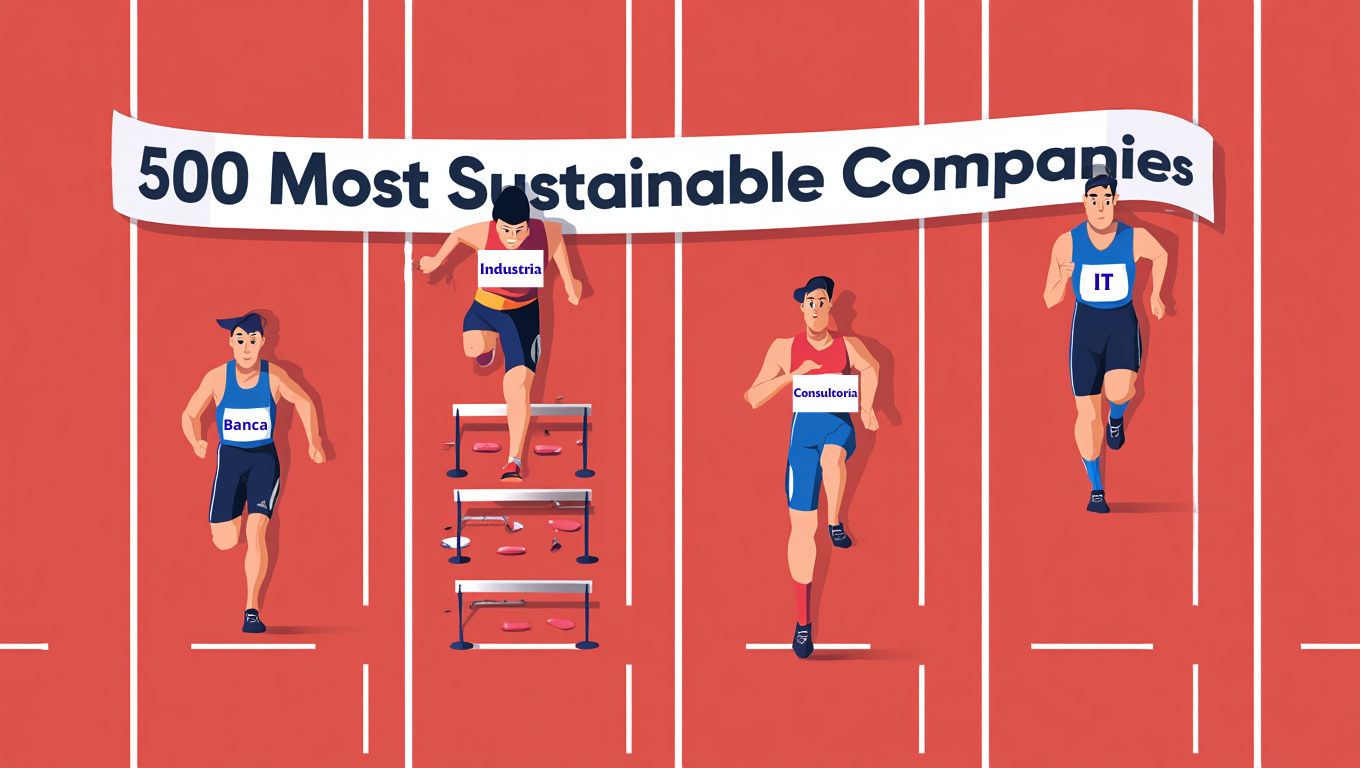
Comparing the sustainability level of a bank with that of a food company based on the same criteria is like having a single event at the Olympic Games for all participants, regardless of whether they are swimmers, gymnasts, or pole vaulters.
-
Industrial companies are a minority in the sustainability ranking recently published by TIME magazine and the Statista platform.
-
In the opinion of Foro Industria y Energía, the main reason why there are so few industrial companies among the top one hundred in the ranking is not due to poor energy management or a lesser commitment by the industries, but rather to the considerable inherent difficulty faced by companies with intensive production processes in meeting the very high sustainability criteria prioritized in these rankings.
-
Far from viewing this lower representation of industrial companies in this ranking as a criticism, we should interpret it as an unequivocal demonstration of the unique challenges faced by industry.
August 1, 2025
A few days ago, TIME and Statista published the ranking of the 500 most sustainable companies in the world for 2025, an analysis that evaluates the public commitment and progress towards sustainability goals of leading global firms during the year 2023.
Among the most striking aspects of the ranking results is the very limited presence of companies from the energy sector and industrial companies, especially among the top one hundred. It is curious that companies generating energy or leaders of industrial sectors such as food or chemicals hardly appear, not even among the top one hundred, let alone among the 500 most sustainable companies in the world.
In contrast, leadership overwhelmingly lies with companies dedicated to digital services, banking, or consulting: only four sectors (Banking, Insurance and Financial Services; Information Technology, Technology and Software; Telecommunications; and Professional Services and Consulting) concentrate more than half of the companies in the top 100.

Does this mean that industrial companies are not sustainable? On the contrary. The scarcity of industrial companies among the top one hundred in the ranking is not due to poor energy management or a lower commitment from industries, but rather highlights the considerable inherent difficulty faced by companies with intensive production processes to meet the very high sustainability criteria prioritized in these rankings. Their larger carbon footprints, intricate supply chains, and the scale of their material transformation operations pose substantial barriers that service providers or digital companies do not face to the same extent.
To make this understandable, comparing the sustainability level of a bank with that of a food company based on the same criteria is like having a single event at the Olympic Games for all athletes, regardless of whether they are swimmers, runners, or pole vaulters.

This situation evokes the image of an evaluation with rules that do not apply equally to all participants. Think of the well-known illustration where a teacher, facing a diverse group of animals – a bird, a monkey, a penguin, an elephant, a fish in a bowl, a seal, and a dog – says: “For a fair selection, everyone must take the same exam: please climb that tree.” This analogy captures the essence of what we observe: industrial companies, by their very nature and intensive processes, compete in a ranking whose metrics and criteria may inherently favor sectors with business models less dependent on complex production chains and intensive resource use.
Therefore, it is not a matter of lack of will or effort, but the structural complexity inherent in industrial operations, which demand massive investments, constant innovation, and a profound restructuring of entire value chains. Far from seeing this lower representation of industrial companies in this ranking as a reproach, we should interpret it as a demonstration of the unique challenges industry faces — challenges that can only be addressed with policies supporting it in an energy transition process to which it is firmly committed. Although the rankings may try to convey otherwise.